The barbell creative strategy
Nassim Taleb keeps his money at the two ends of the risk spectrum and nothing in between. Creative portfolios should be built the same way.
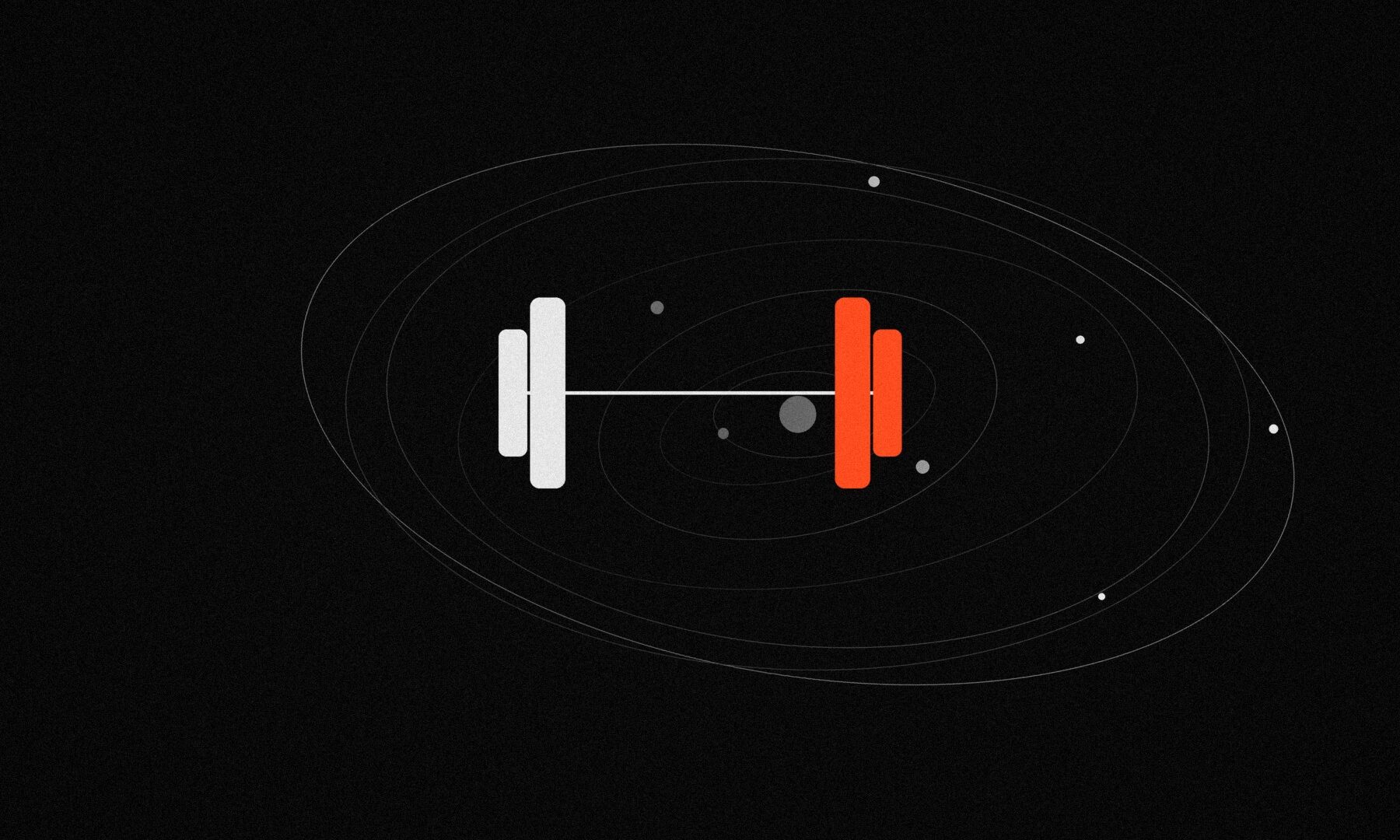
Nassim Taleb has a rule for investing that he calls the barbell: put most of your money in the safest things available, put a small slice into wild, asymmetric bets, and put nothing at all in the middle. No moderate risk. No sensible-sounding medium. Two heavy ends, an empty bar between them.
He was talking about portfolios of money. It works uncomfortably well for portfolios of work.
The heavy end
Around eighty percent of what a studio makes should be disciplined, proven, almost boring in its reliability. Type systems that have been pressure-tested. Site architecture that follows patterns users already understand. Launch processes with checklists so worn they’re soft at the edges. This is the end of the barbell that pays rent, and there’s no shame anywhere in it. Craft executed cleanly, on time, for the hundredth time, is rarer than the industry pretends.
Clients don’t hire the heavy end for surprises. They hire it because it doesn’t produce any.
The wild end
The other twenty percent should be genuinely strange. Not “bold refresh” strange. Actually strange: the ideas with a real chance of failing in public and a small chance of becoming the thing people remember you for. Self-initiated projects with no client attached. The concept in the deck that makes the room go quiet for a second too long. We put a retro handheld game console into the world once, for no strategic reason a spreadsheet would accept, and it remains one of our favorite things we’ve made.
Wild swings only work if they’re allowed to miss. That’s the point of capping them at a slice of the whole: the downside stays survivable while the upside stays uncapped. You can afford ten weird experiments when nine failures cost you almost nothing and the tenth changes what people think you are.
The mush in the middle
Here’s the part Taleb is most insistent about, and the part most creative budgets ignore: the middle is not a compromise between the two ends. It’s worse than both.
You know middle work when you see it. The campaign that’s a little different but not enough to notice. The rebrand that moves the logo three degrees toward whatever won awards last year. Safe enough that nobody gets fired, adventurous enough that everyone feels creative, and the market responds to it the way it responds to weather. Mildly. Briefly. Not at all.
This is where budgets actually die, and they die politely, which is why nobody holds a funeral. A failed wild swing generates a lesson and a story. Disciplined craft generates trust and revenue. Middle work generates a case study nobody reads, because it took moderate risk for moderate reward and moderation is precisely the thing attention ignores, and everyone involved walks away vaguely certain that marketing doesn’t work.
Marketing works fine. The middle doesn’t.
The shape scales down, too. Inside a single engagement, the barbell might look like a rigorously conventional site architecture carrying one page that takes a genuine creative risk, or a measured, proven campaign structure funding one execution nobody has tried in the category. Clients find this easier to approve than blanket boldness, because the risk is fenced. They can point at exactly where the danger lives, see that it’s small, and see that everything around it is load-bearing and calm. What they can’t do, once they’ve seen work sorted this way, is unsee how much of their previous spend lived on the empty part of the bar.
The hard conversation is that the middle feels responsible. Presenting two options (one rock-solid, one feral) sounds riskier than presenting three where the third splits the difference. Every instinct in a conference room bends toward the blend. Which is exactly why the blend is so crowded, and why the crowd is so quiet.
When we plan a year now, we sort by ends. What’s the disciplined work that keeps the lights on and the standards up. What are the two or three swings we’d attempt if nobody was watching. Anything that answers to neither description gets asked a rude question: which end are you pretending to be.
Most of the time it doesn’t have an answer. The bar stays empty in the middle.
That’s not a gap in the strategy. That’s the strategy.