Colony Presents: The Arcade
(now with a wizard…)
So, we built an arcade. It started as a personal project for us and the best parts were never planned.
Years ago I made a sticker that said I’m a developer, not a wizard. I made it because I said it constantly, usually to someone asking whether a thing could ship by Friday. It was a joke about the limits of the job.
Earlier this month I was sitting in my office writing dialogue for a wizard who lives in our arcade, and it finally landed. The sticker had been sitting there the whole time, waiting.
That isn’t foresight. It’s almost the opposite. It’s how a lot of the things I like most about Colony have happened: one small idea becomes another, something sticks around longer than expected, and eventually things made years apart start feeling like they were always supposed to know each other.
Why a digital agency built an arcade
The Arcade started because we wanted to build something. That’s really it. No campaign, no lead funnel, no strategic initiative to increase engagement through interactive nostalgia. Nobody made a deck about why Colony needed an arcade.
We’re builders before we’re an agency, and I think the craft only stays sharp if you occasionally practice somewhere outside a client’s brief, budget, scope and deadline. Client work needs those things. That’s part of doing the job well. But those constraints don’t always leave room to follow a stupid idea for three hours just because you want to see what happens.
So we build things for ourselves. Most of them die quietly, which is fine. That’s what practice looks like. Every once in a while one keeps asking for more.
Practice is part of the job. You just don’t usually get to show anyone the practice.
The wizard was an accident
This is probably my favorite part of the whole project because nobody could have planned it, and nobody asked for it.
While building the three core games, we eventually started asking ourselves how we could make them a little more fun. Snake was the first experiment, and inevitably it got a Fun Mode with a ridiculous number of custom modifiers.
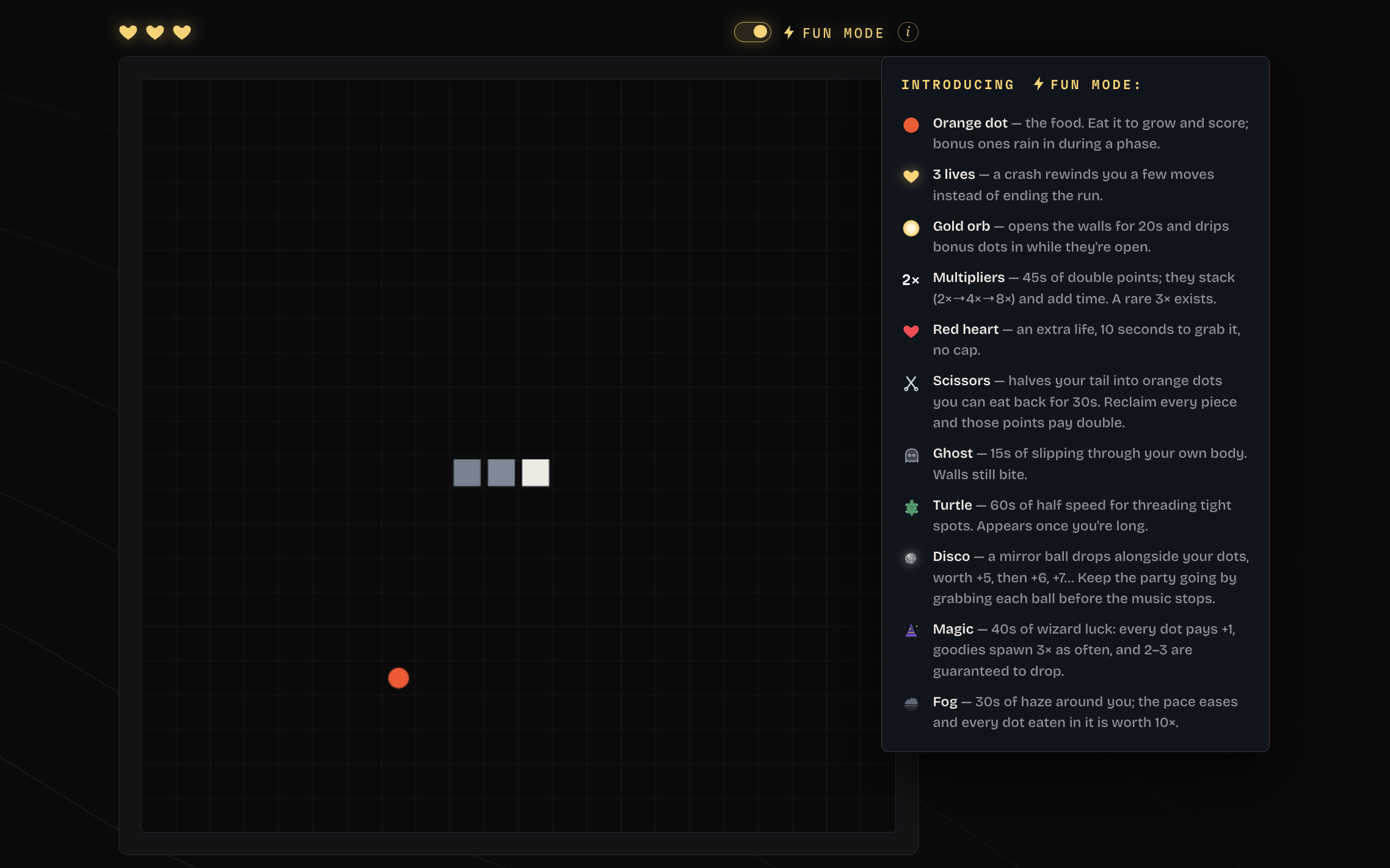
One of those was a magic dot that turned the snake rainbow. Rainbow was fine, but it didn’t really have a reason to exist, so I renamed it Disco, added music and turned the board into a dance floor.
And this is the best part about building something for yourself: there is no box to think outside of because there was never a box in the first place. Nobody gave us requirements for what Snake was allowed to be. There was no stakeholder asking us to preserve the original feature set, no scope change to approve and no reason we couldn’t add something, remove it entirely or abandon an idea five minutes later.
So Magic didn’t need to stay a rainbow snake just because that’s what we had already built. It could become a wizard’s hat that gives you items for your quest simply because that sounded more fun. Then I thought it would be funny if the wizard who owned the hat said a few things while he did it. The wizard provides. Here, take these on your quest.
We already had ElevenLabs, so an hour later he had a voice. Once the wizard could talk, he needed more things to say. Then he needed to know what was happening in Snake, then Solitaire, then Minesweeper, then the rest of the arcade. He now has more than a thousand recorded lines, knows what game you’re playing and how badly it’s going, and sits in a chair in the lobby when he isn’t wandering off somewhere.
Nobody sat down and decided Colony should have a wizard. We changed one thing because we could, followed the next idea because we wanted to, and somewhere along the way a rainbow snake turned into a character with a voice, a chair and apparently a full-time job now.
Your projects start building worlds of their own
You know those old crime movies and investigation thrillers where someone has a wall covered in photos, notes and red string, and somehow every clue leads to another clue? This next part is going to feel a little like that, so bear with me. I also think it’s how some of the best things get built.
The same pattern from Fun Mode just kept repeating. The first version lived on our home NAS for my wife and me. Two players, a scoreboard, absolutely no ambitions. Then we wanted to play it somewhere else, so it became a web app. Then we wanted to port it to the Polycade at our house, which meant building a completely offline version with no network dependency.
We’re somewhere around version fifty-five now. Not fifty-five releases. Fifty-five times we looked at it and thought, what if.
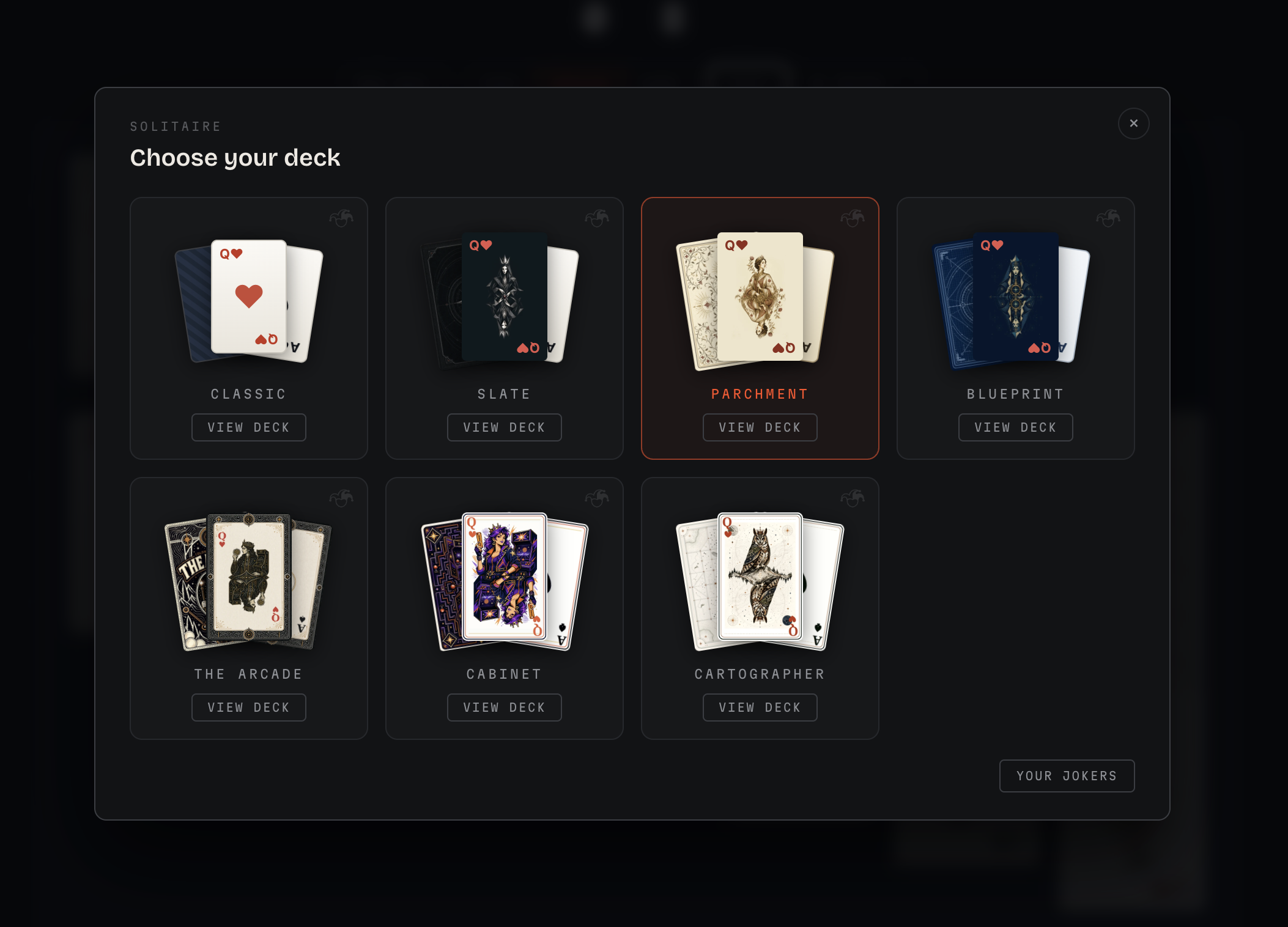
Solitaire needed cards. Making cards made us care about the artwork. The artwork made us care about creating jokers. The jokers were the perfect non-critical game element to turn into a reward system. That system led to Easter eggs and hiding things throughout the Arcade. Hidden things gave purpose to The Void on the arcade’s 404 page, which became a whole separate side quest of its own. The decks got good enough that we decided to print them. Then the packaging needed to feel like it came from the same place.
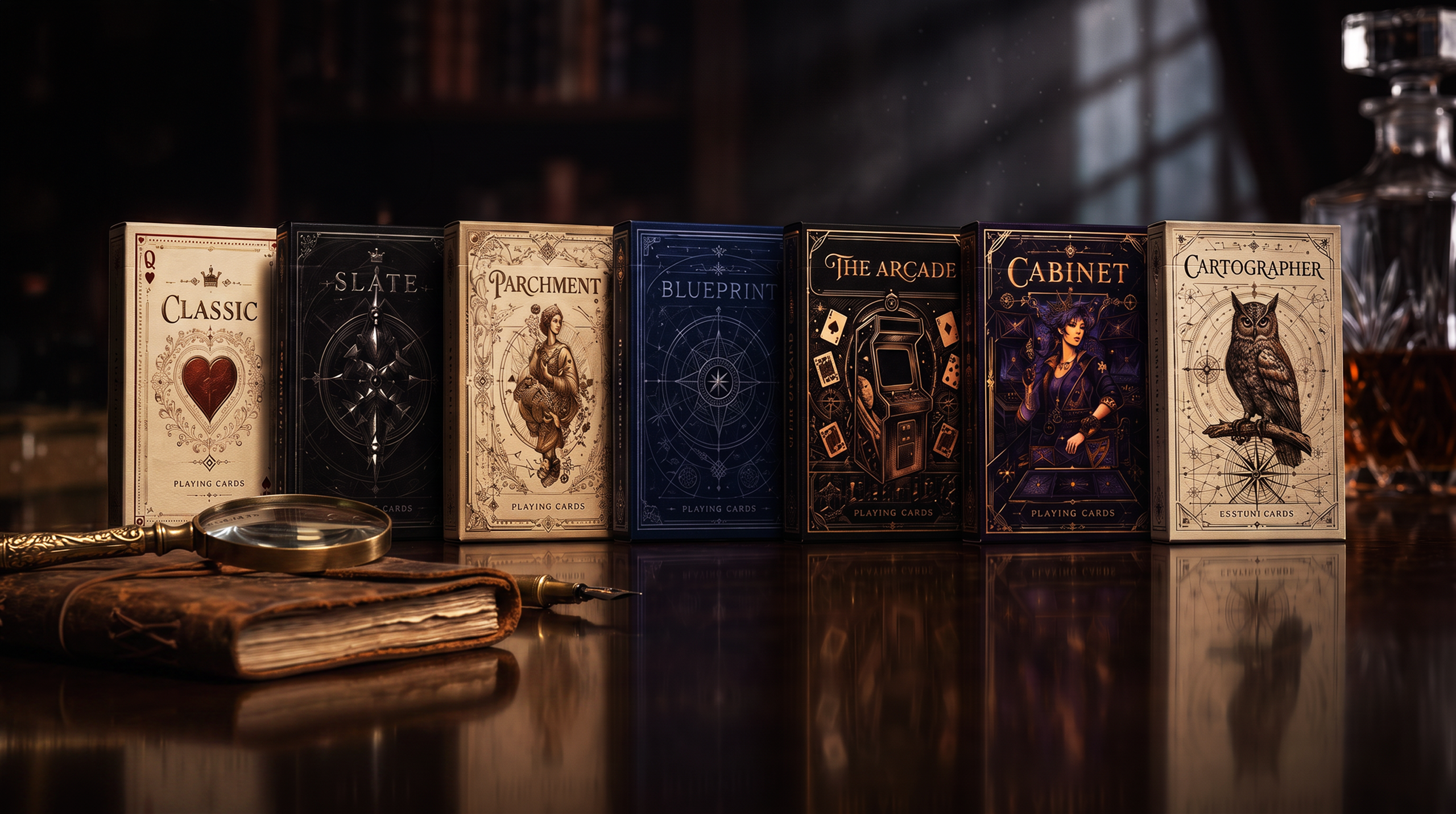
One thing kept creating a reason for the next thing to exist.
At some point you stop building a collection of features and realize you’ve accidentally made a little world.
Ship it, then let it tell you what it wants
I think that’s the part of this project I’ll carry into everything else.
There is a version of building where you try to figure out the entire thing before you start. Planning matters. Architecture matters. Knowing what you’re making matters. But there is another kind of knowledge you only get once the thing exists.
You see somebody ignore the button you thought was obvious. You hear the wizard say something once and immediately know what his personality is. You design one joker and realize the whole deck needs to change. You put something in an arcade cabinet and discover that the web version and the physical version want completely different things.
You can’t spec all of that in week one because you haven’t earned the information yet. Build the version that gives the idea somewhere to live, then pay attention to what happens next.
Ship the MVP, then listen to it. A project allowed to evolve can end up somewhere you couldn’t have written down at the beginning.
The brand part happens the same way
There are owls all over Colony now. In the arcade, on the site, around the studio, next to Phillip the Wise, the wizard’s official name, and on the Cartographer deck. Nobody held a meeting and selected owls as a strategic brand pillar. They just kept fitting.
The same thing happened with the wizard, The Void, certain jokes and little visual references that keep resurfacing years later.
That’s what happens once a brand has been itself long enough to develop some gravity. You stop deciding what belongs and start recognizing it.
A brand isn’t just the identity system you create at the beginning. It’s also the collection of choices you keep making afterward. Some are deliberate, some are accidents and some start as jokes. The good ones survive long enough that eventually you forget which was which.
Years of saying I’m a developer, not a wizard, and one day the joke has a voice, a chair and a purpose.
What it’s actually for
We don’t need the Arcade to blow up. There isn’t a conversion target attached to it. It isn’t a lead magnet, you don’t need an account, and we’re not going to ask for your email after three rounds of Solitaire.
The thing itself is the point.
The real product of a creative place isn’t only the websites, campaigns, apps or brands that leave the building. It’s also the ability to make people feel something. An arcade with a wizard in it is a moment. So is opening a physical deck of cards you first saw inside a browser. So is finding a door nobody told you was there, or discovering something after playing for six months and realizing we’ve known about it the entire time.
And, conveniently, all the messing around makes us better at the serious stuff too. We’ve learned how audio behaves across browsers and iOS, how to make a full application survive completely offline, how to handle save states across devices, and plenty of things we didn’t know we needed to know when this started. We got to learn all of it on our own time, with nobody else’s budget at risk, and hand that knowledge to the next client who needs it.
Maybe that’s the actual reason we keep making stuff like this. You make the ridiculous thing because you want to, follow it farther than is reasonable, learn something useful, and every once in a while look around and realize all the ridiculous things have started connecting to each other.
Go find the wizard. He’ll tell you how you’re doing, whether or not you asked.