The Colony Retro Handheld
We ship light for a living. Once we shipped plastic and buttons instead, and it may be the most finished thing we've ever made.
One of our favorite things we’ve ever made has no URL.
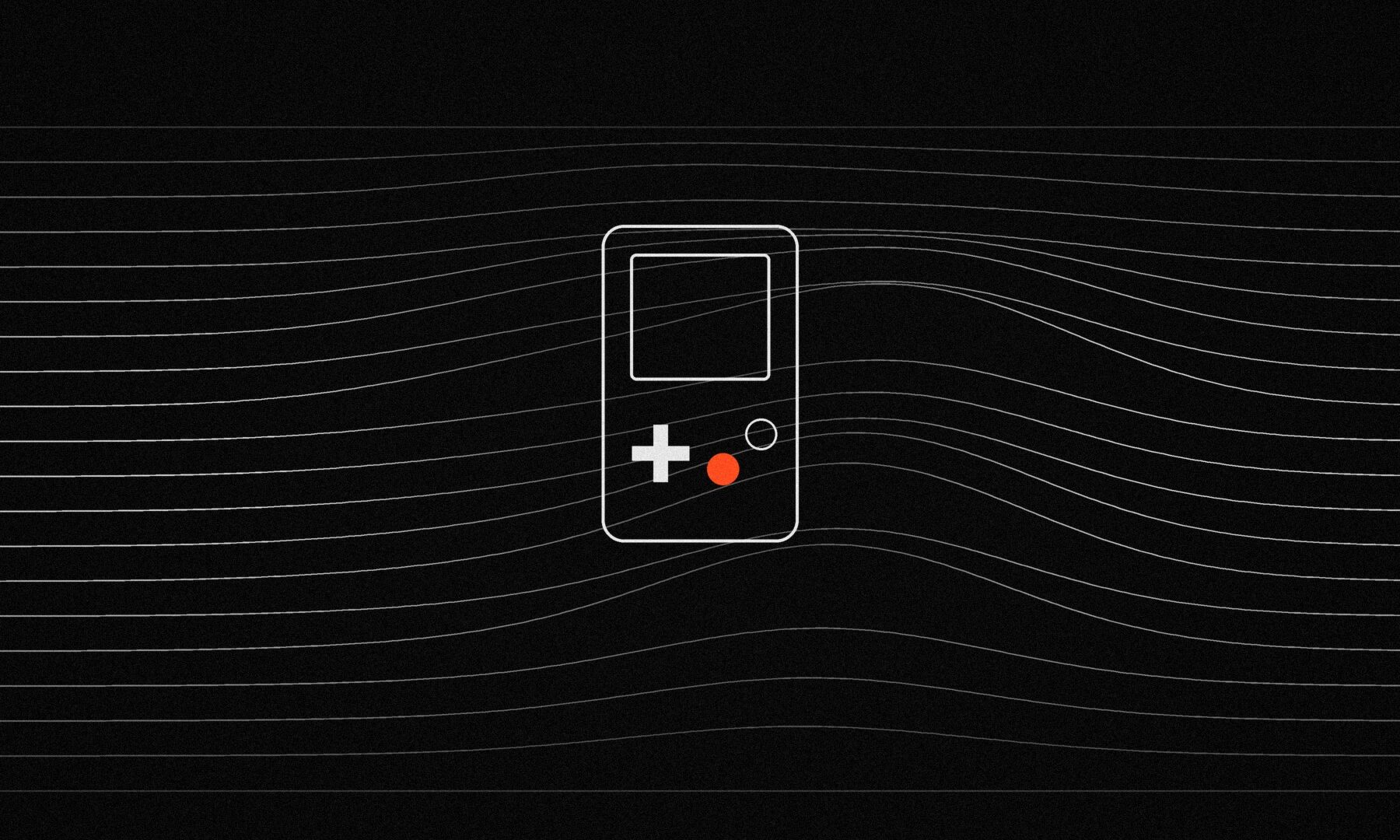
It’s the Colony Retro Handheld: buttons, a screen, a shape that fits in two hands, games that ask nothing of you except a few minutes. A room full of people who ship screens for a living wanted to make a screen you could hold, so we did. We’re not going to recite a spec sheet here, partly on principle and partly because the specs were never the point.
Why a web shop built a toy
The honest first answer: we wanted to. There’s a longer answer underneath, though.
Everything we make professionally lives behind glass. Sites, apps, campaigns, systems: real work we’re proud of, but all of it exists as light on other people’s devices, updated forever, measured constantly, finished never. None of it has weight. Nothing we’ve shipped in fourteen years has corners, or a texture, or a satisfying click, and at some point that absence started to itch.
An object pushes back in ways a screen can’t. Buttons either feel right under a thumb or they don’t, and no dashboard on earth will tell you which; your hands just know. Building the handheld meant caring about questions our normal work never asks, like what a click should sound like and how plastic should sit in a palm, and those questions turned out to be the vacation.
No scoreboard attached
The handheld measures nothing. Nobody gets funneled anywhere. It can’t be A/B tested or quarterly-reviewed, no conversion event fires when someone grins at it, and it will never appear in a case study with a percentage next to it. The whole job of the object is to be a good time, and it clocks in every day.
That’s a strange feeling for people like us, and a clarifying one. Professionally, every screen we touch is trying to accomplish something for somebody: convert, inform, retain, persuade. Worthy goals all, but live inside them long enough and you can forget that delight is allowed to be the entire brief. The handheld exists for delight and delivers nothing else, and shipping it felt less like a product launch than like remembering something.
What hardware taught the software people
Objects are honest in ways screens aren’t, and the honesty was educational.
Done has to mean done.
When a site ships with a bug on Tuesday, we fix it Tuesday; the deploy button is a standing offer of forgiveness. An object grants no such mercy. Once it’s in someone’s hands it is what it is, permanently, so finishing becomes a real act instead of a milestone you schedule. We sweat endings differently now, even on projects that do have deploy buttons.
Constraints stop being theoretical, too. A layout can pretend space is infinite; there’s always more scroll. Physical things own their compromises in public: every button exactly where it is forever, no v2 patch for a corner that digs into a palm. Spend a while inside that honesty and you notice how often digital design uses “we can change it later” as an anesthetic.
And the team learned its taste is portable. People who normally argue about breakpoints spent weeks arguing about button feel with exactly the same intensity and exactly the same standards, which told us something we’d hoped was true: the craft isn’t the medium. Care transfers. Put this crew in front of any material and the arguments will be identical, and identically worth having.
The handheld still turns up around the studio and out in the world, the way our favorite projects tend to. Someone picks it up between calls and plays for a minute, and that minute is the entire return, paid in full, every time.
Mostly, though, we love what it is when nobody’s holding it: finished. Sitting there complete. Which is more than we can say for anything else we’ve ever shipped.